
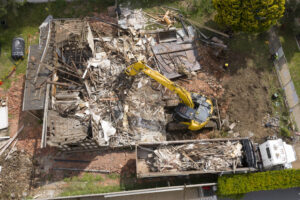
Demolition and renovation projects, especially on older buildings, often uncover more than the project scope originally accounted for. Materials that were standard construction practice decades ago, asbestos, lead-based paint, and certain chemical residues among them, are now regulated hazardous materials that require specific handling before demolition or renovation work can proceed. Addressing these considerations before the first wall comes down protects workers, avoids project delays, and keeps a project compliant from the outset.
What hazardous materials commonly show up in demolition and renovation?
Older structures frequently contain:
- Asbestos in insulation, flooring, ceiling tiles, and pipe wrapping
- Lead-based paint on walls, trim, and exterior surfaces
- PCBs in older electrical equipment, ballasts, and caulking
- Mercury in older thermostats, switches, and fluorescent fixtures
- Contaminated soil beneath structures with a history of industrial use
The presence and extent of these materials often isn’t obvious until a proper survey is conducted, which is why skipping this step is one of the most common, and costly, mistakes on demolition projects.
Why is a pre-demolition survey essential?
A pre-demolition hazardous materials survey identifies what’s present before any physical work begins, allowing the project to be planned around proper abatement rather than discovering hazards mid-demolition. Many jurisdictions require this survey by law before a demolition permit will be issued, but even where it isn’t strictly required, skipping it creates significant risk of exposing workers to hazards or triggering a costly work stoppage partway through the project.
What happens if hazardous materials are found during a project already underway?
Discovering asbestos, lead paint, or other hazardous materials mid-project typically requires an immediate work stoppage in the affected area until proper abatement procedures can be arranged. This is far more disruptive, and expensive, than addressing known hazards in the original project plan, since crews, equipment, and schedules all have to be reorganized around an unplanned delay.
What does proper abatement typically involve?
Abatement procedures vary by material but generally include:
- Containment of the affected area to prevent contamination spread
- Specialized removal procedures performed by licensed abatement professionals
- Air monitoring to confirm hazard levels before an area is cleared for normal work
- Proper packaging, transport, and disposal of removed hazardous materials
- Documentation confirming abatement was completed to regulatory standards
Who is responsible for hazardous waste generated during demolition?
Responsibility typically falls to the project owner or general contractor, depending on contract terms, but the waste itself must be properly characterized, transported, and disposed of regardless of who holds that responsibility on paper. Clarifying this in project planning, rather than after materials are already removed, prevents confusion about who’s managing disposal logistics and documentation.
How can project teams avoid delays related to hazardous materials?
Building hazardous materials assessment into the earliest stages of project planning, rather than treating it as a step immediately before demolition, gives teams time to arrange abatement, transportation, and disposal without it becoming a bottleneck. Projects that treat this as an afterthought tend to face the most significant, and expensive, delays.
Western Environmental Services supports demolition and renovation projects with hazardous waste identification, transportation, and disposal to keep projects moving safely and on schedule. Call (626) 339-2340 to discuss your project’s needs.