
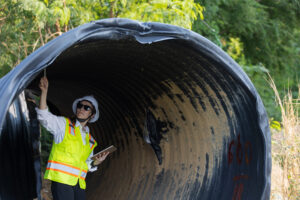
When rain falls on a facility with exposed materials, uncovered dumpsters, or outdoor storage areas, it can pick up pollutants and carry them straight into the storm drain system, and eventually into local rivers and the ocean. California regulates this risk closely, and businesses that don’t prepare before the rainy season can face fines, forced shutdowns of outdoor operations, or costly emergency remediation. Understanding what storm water compliance actually requires is the first step toward avoiding those problems.
What is storm water runoff compliance?
Storm water compliance refers to a set of state and federal regulations designed to prevent pollutants like oil, sediment, metals, and chemical residue from entering storm drains during rain events. In California, the State Water Resources Control Board oversees this through the Industrial General Permit (IGP) and related programs, which apply to a wide range of industrial and commercial facilities. Unlike sanitary sewer wastewater, storm water typically flows untreated directly into local waterways, which is why regulators treat contamination of it so seriously.
Who needs a storm water permit?
Not every business needs formal coverage, but many more qualify than owners expect. Facilities that typically need a permit include:
- Manufacturing and industrial plants with outdoor operations
- Construction sites disturbing one acre or more of soil
- Facilities with uncovered material or waste storage
- Trucking and freight terminals with outdoor vehicle maintenance
- Food processing plants with outdoor loading or storage areas
If your business isn’t sure whether it qualifies, a site assessment from an environmental compliance provider can clarify obligations before an inspector does it for you.
What happens if a business isn’t compliant?
Non-compliance carries real financial and operational risk. Regulators can issue fines that scale with the severity and duration of the violation, and a documented spill reaching a storm drain can trigger a much larger investigation. Inspectors typically look for three things: physical containment measures (berms, covers, secondary containment), an up-to-date Storm Water Pollution Prevention Plan (SWPPP), and evidence of ongoing monitoring, such as sampling logs and inspection records. Missing any of these is one of the most common reasons facilities fail an inspection.
How can businesses prepare before the rainy season?
Preparation is far cheaper than remediation. Before the rains start, businesses should:
- Inspect and repair containment berms, drain covers, and grading around storage areas
- Update the SWPPP to reflect any changes in operations, equipment, or layout since the last review
- Train staff on spill response procedures specific to rainy-weather conditions
- Confirm spill kits and absorbent materials are stocked and accessible
- Schedule a pre-season site walkthrough with a compliance partner to catch issues early
Waiting until the first storm to address these items often means responding to a violation instead of preventing one.
Why work with an environmental compliance partner?
Storm water regulations change periodically, and permit requirements can vary depending on a facility’s industry classification and location. A partner who specializes in industrial waste and environmental compliance can help interpret current requirements, prepare documentation, and respond quickly if a spill does occur.
Western Environmental Services helps California businesses across construction, manufacturing, and industrial sectors stay ahead of storm water regulations with site assessments, SWPPP support, and rapid response services. Call (626) 339-2340 to schedule a pre-rainy season compliance review before the next storm rolls in.