
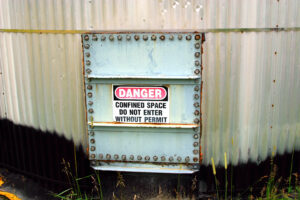
Confined spaces are among the most dangerous work environments in industrial and commercial settings, not because they’re inherently complex, but because their risks are often invisible until something goes wrong. Tanks, vaults, pipelines, and similar enclosed areas can harbor toxic atmospheres, oxygen deficiencies, or engulfment hazards that aren’t obvious from the outside. Understanding the permit, training, and compliance requirements around confined space entry is essential for any business whose operations involve them.
What qualifies as a confined space?
A confined space is generally defined as an area large enough for a worker to enter and perform tasks, but not designed for continuous occupancy, with limited or restricted means of entry and exit. Common examples include storage tanks, sewers, utility vaults, silos, and certain pipelines. A confined space becomes a “permit-required” confined space when it also contains, or has the potential to contain, a hazard such as a toxic atmosphere, engulfment risk, or configuration that could trap or asphyxiate a worker.
What makes confined spaces so hazardous?
The dangers often aren’t visible at a glance. Oxygen levels can be deficient without any obvious sign, toxic gases can accumulate from residue or decomposition, and the physical configuration of the space itself can make rescue extremely difficult if something goes wrong. This combination of hidden risk and difficult rescue conditions is why confined space fatalities disproportionately involve would-be rescuers who enter without proper equipment or training, not just the original worker.
What does a confined space entry permit require?
A proper entry permit process typically includes:
- Atmospheric testing before entry, and continuous monitoring during the work
- Identification of all physical and atmospheric hazards specific to that space
- Ventilation or other hazard control measures where needed
- A designated attendant stationed outside the space at all times
- Clear rescue procedures established before entry begins, not improvised afterward
Every permit-required confined space entry should be documented, with the permit itself serving as a record that all required checks were completed before anyone entered.
What training do workers need?
Workers involved in confined space entry generally fall into distinct roles, entrants, attendants, and supervisors, each with specific training requirements. Entrants need to understand hazard recognition and communication procedures, attendants need to know how to monitor conditions and initiate rescue without entering themselves, and supervisors need to verify that all permit conditions are met before authorizing entry. Training needs to be refreshed regularly, not treated as a one-time certification, since unused skills and outdated hazard knowledge fade over time.
What role does specialized equipment play?
Confined space work often requires equipment beyond standard safety gear, including atmospheric monitors, ventilation blowers, retrieval systems, and specialized personal protective equipment suited to the specific hazards present. Vacuum trucks and specialized cleaning equipment are frequently used in combination with confined space protocols when the work involves removing sludge, residue, or other materials from tanks and vaults.
What are common compliance pitfalls?
Businesses often run into trouble with expired or incomplete atmospheric monitoring equipment calibration, permits that are filled out as a formality rather than reflecting actual site conditions, and rescue plans that exist on paper but haven’t been practiced. A permit is only as good as the accuracy of what’s documented on it.
Western Environmental Services provides confined space entry support using specialized training, equipment, and vacuum truck services to help businesses meet compliance requirements safely. Call (626) 339-2340 to discuss your facility’s confined space needs.